

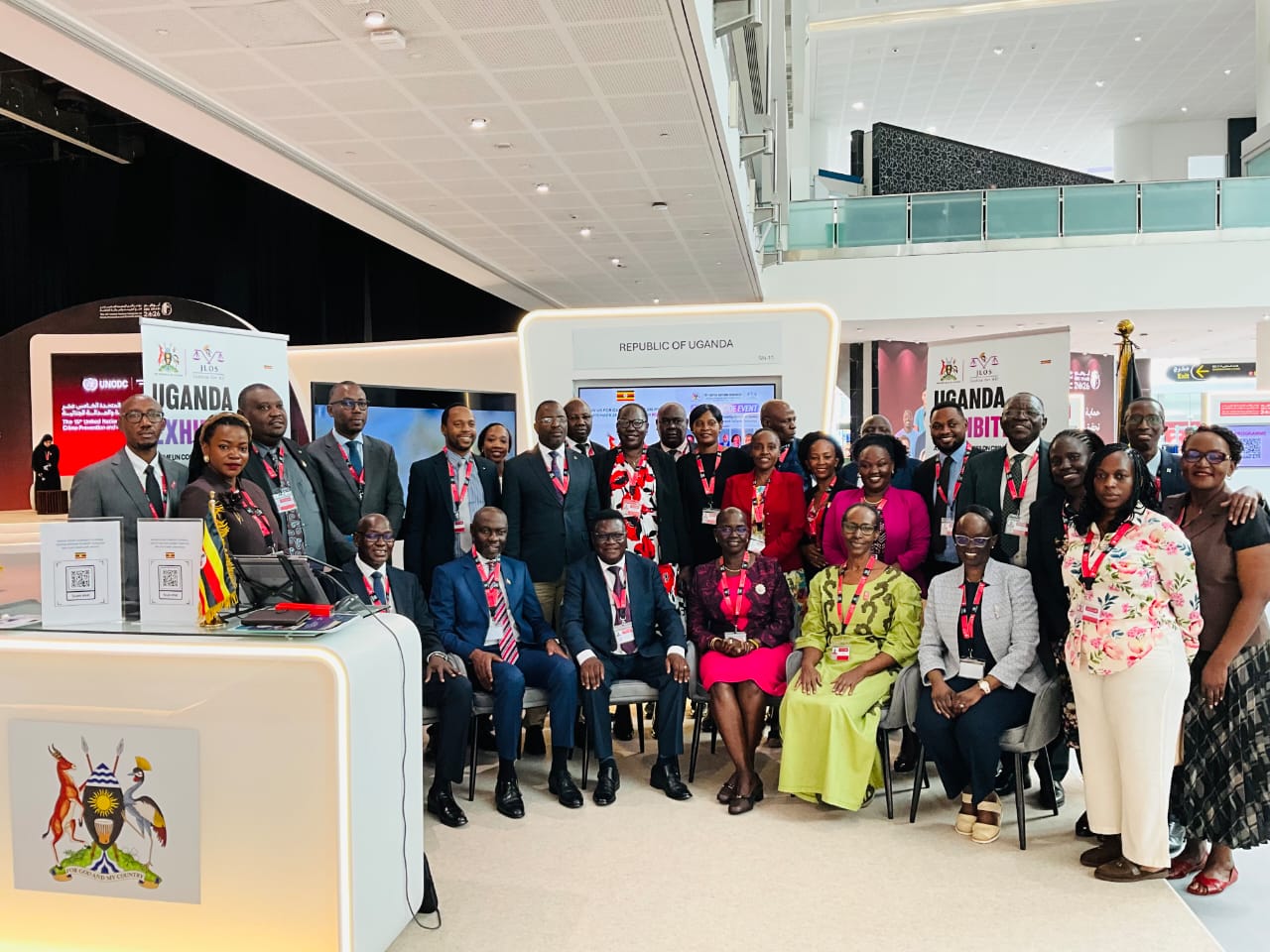
Minister Norbert Mao leads Uganda’s delegation at the 15th United Nations Congress on Crime Prevention and Criminal Justice in Abu Dhabi
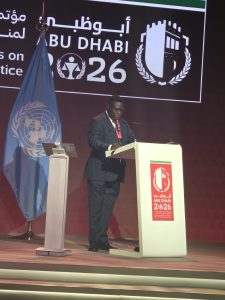
ABU DHABI, UNITED ARAB EMIRATES — 27 September 2026: Uganda has placed its justice and criminal justice reforms at the centre of global discussions on crime prevention, the rule of law and sustainable development, as Minister of Justice and Constitutional Affairs, Hon. Norbert Mao, today delivered Uganda’s national statement at the 15th United Nations Congress on Crime Prevention and Criminal Justice in Abu Dhabi.
As Head of Delegation, Minister Mao outlined Uganda’s approach to building a coordinated, accessible and increasingly technology-enabled justice system, while calling for stronger international cooperation against emerging forms of crime.
The Congress, taking place from 25 September to 1 October at the Abu Dhabi National Exhibition Centre, is being held under the theme: “Accelerating crime prevention, criminal justice and the rule of law: protecting people and planet and achieving the 2030 Agenda for Sustainable Development in the digital age.”
Minister Mao said the changing nature of crime demands responses that go beyond punitive measures to address the social and economic conditions that create vulnerability to crime, while integrating gender perspectives and strengthening action against gender-based violence.
He highlighted the growing threats posed by organised crime, terrorism, cybercrime, trafficking in persons and money laundering, noting that these challenges increasingly transcend national borders.
Uganda is developing a National Strategy Against Transnational Organised Crime to address the structural drivers, root causes and enablers of organised crime, while strengthening the legislative and institutional frameworks required to prevent and counter it.
Uganda has also strengthened its international commitments, including ratifying the Trafficking in Persons and Smuggling of Migrants Protocols in 2024 and being among the first States to sign the United Nations Convention against Cybercrime in Hanoi in October 2025.
A justice system that works as a chain
A defining feature of Uganda’s participation in Abu Dhabi is its chain link approach to justice; bringing institutions with different mandates into one coordinated justice system.
The delegation includes the Uganda Police Force, the Office of the Director of Public Prosecutions, the Judiciary, the Uganda Prisons Service and the Ministry of Justice and Constitutional Affairs, alongside civil society partners including LASPNET and UYDEL.
From investigation and prosecution to adjudication, custody, rehabilitation, legal aid and prevention, the institutions represent different links in the same justice journey.
This approach is anchored in Uganda’s sector wide justice model, established in 1999 and now bringing together 18 ministries, departments and agencies under the Justice, Law and Order Sub-programme (JLOS).
The model enables justice institutions to plan, budget, implement and report together, creating a coordinated national response to challenges that cut across institutional mandates.
Justice in the digital age
Minister Mao also highlighted Uganda’s ongoing digital transformation across the justice and security sector.
The Judiciary has embraced digitised case management systems; the Uganda Police Force is taking services closer to communities through the Sub-County Policing Model; and the ODPP has introduced Prosecution-Guided Investigations Guidelines. The Financial Intelligence Authority continues to safeguard the integrity of Uganda’s financial system, while the Uganda Prisons Service advances rehabilitation programming.
Minister Mao emphasised that technology must be harnessed responsibly to improve justice delivery without creating new avenues for criminality or compromising fundamental rights.
According to Uganda’s national statement, the country has recorded a decline in crime rates for three consecutive years, while its prosecution service has achieved a reported 75 per cent conviction rate.
Uganda has also welcomed the Abu Dhabi Declaration, recognising crime prevention and criminal justice as essential to sustainable development and the protection of human dignity.
As he concluded his address, Minister Mao called for a criminal justice system that is “innovative, inclusive, evidence-based, and firmly anchored in the rule of law.”
Uganda’s participation in Abu Dhabi provides a platform to share its experience, strengthen international partnerships and contribute to global discussions on building safer, more just and resilient societies.
The Congress runs until 1 October 2026.