

The Solicitor General, Pius Perry Biribonwoha, has reaffirmed the Ministry of Justice and Constitutional Affairs’ commitment to strengthening the Centre for Arbitration and Dispute Resolution (CADR) to promote professional, accessible and effective Alternative Dispute Resolution (ADR) services in Uganda.
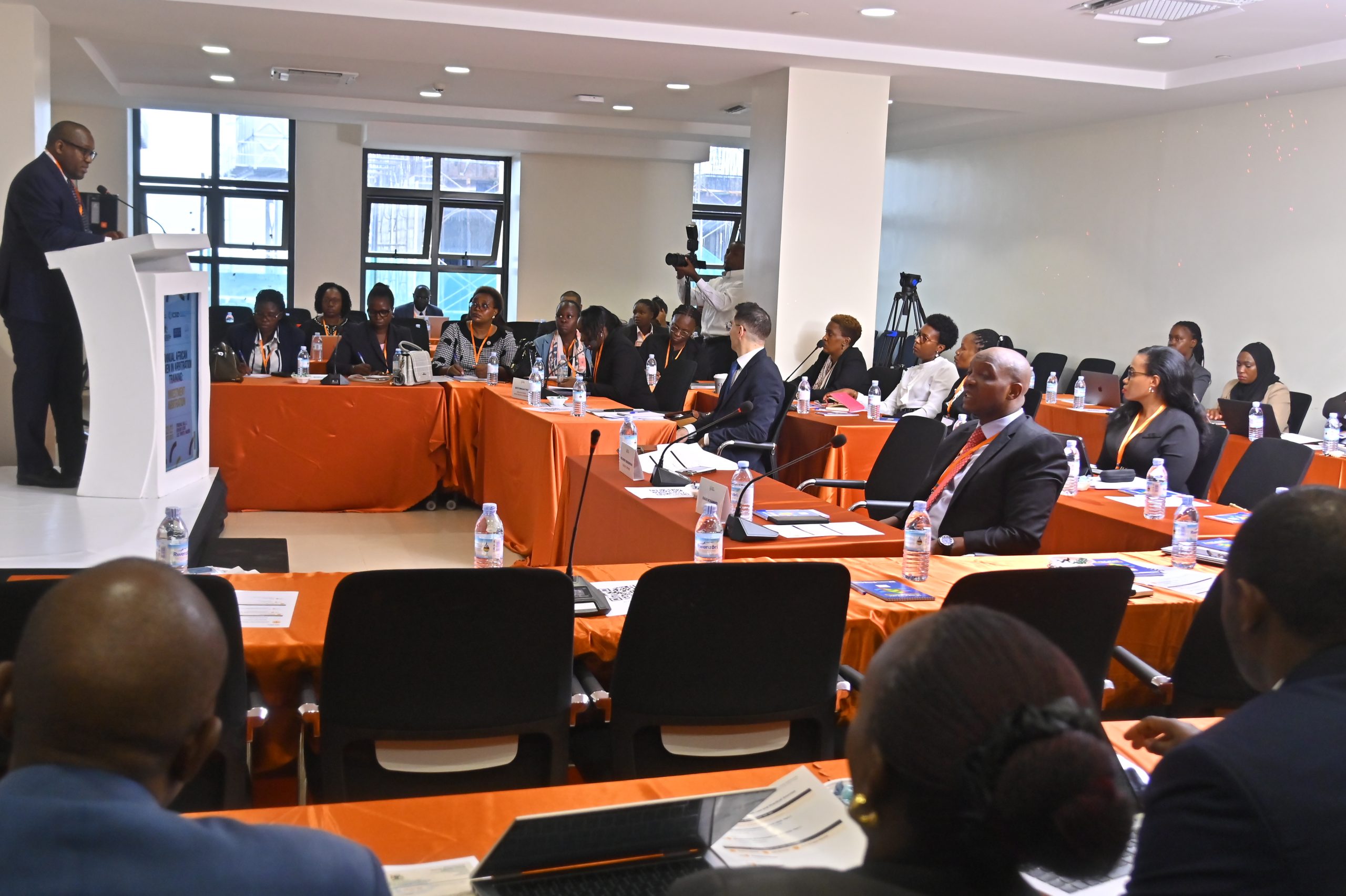
Biribonwoha made the remarks this morning, while officiating at the opening of the African Women in Arbitration (AWA) Investment Arbitration Training Workshop at JLOS Towers, Naguru, Kampala.
The two-day workshop, running from 22–23 October 2026, brings together arbitration practitioners and other stakeholders to strengthen professional capacity, promote knowledge-sharing and advance arbitration and alternative dispute resolution across Africa.
The Solicitor General thanked AWA, the International Centre for Settlement of Investment Disputes (ICSID), CADR, the World Bank Group, the Law Society – Legal Aid Project and other partners for supporting initiatives that advance arbitration and dispute resolution on the continent.
He emphasised that the Ministry remains committed to providing the institutional support and enabling environment necessary for CADR to effectively discharge its mandate.
“ A credible ADR institution requires not only a sound legal foundation, but also appropriate structures, capable personnel, effective systems, professional standards and meaningful stakeholder collaboration,” he said.
Strengthening CADR’s Institutional Capacity
Biribonwoha noted that following the enactment of the Arbitration and Conciliation (Amendment) Act, 2024, CADR was re-established as a department within the Ministry of Justice and Constitutional Affairs, mainstreaming its functions into the Ministry.
The Centre plays an important role in supporting the effective use of arbitration, mediation, conciliation and other alternative dispute resolution mechanisms in Uganda. These approaches provide alternatives to conventional court proceedings, offering parties appropriate avenues to resolve disputes while complementing the formal justice system.
CADR provides institutional and technical support for ADR processes, facilitates appropriate appointment processes for arbitrators and other practitioners, promotes professional standards and supports training and capacity-building in the sector.
The Solicitor General reported that CADR’s departmental structure was approved by the Public Service Commission in 2025. The Centre is operational, with staff, systems and procedures in place to receive and process applications relating to the appointment of ADR practitioners and experts.
He, however, noted that institutional development remains an ongoing process, requiring continued investment in operational capacity, improved procedures and systems that promote efficient and professional services.
Building Professional Capacity and Standards
The Solicitor General underscored the importance of competence, integrity and professionalism among arbitrators, mediators and other ADR practitioners.
He observed that a skilled and ethical pool of practitioners is essential to building public and commercial confidence in alternative dispute resolution, particularly as the needs of individuals, businesses, investors and public institutions continue to evolve.
He reaffirmed the Ministry’s support for CADR’s efforts to promote professional standards, facilitate appropriate appointment processes and support training and continuous professional development for ADR practitioners.
Promoting Partnerships and Women’s Participation
Biribonwoha highlighted collaboration as a critical component in strengthening Uganda’s ADR framework, calling for sustained cooperation among the Judiciary, government institutions, professional associations, academic institutions, the private sector and regional and international development partners.
He welcomed the partnership between CADR and AWA, noting that the workshop’s focus on investment arbitration provides an opportunity to deepen professional expertise, strengthen institutional relationships and expose practitioners to evolving regional and international practices.
He further emphasised the importance of initiatives that create opportunities for women’s participation and professional advancement in arbitration.
The Ministry, he said, looks forward to continued collaboration that translates professional engagements into practical capacity-building and lasting institutional partnerships.
Strengthening Uganda’s Dispute Resolution Framework
The Solicitor General reiterated that the Ministry’s ultimate objective is to support CADR in contributing to a credible, accessible and effective ADR framework that responds to Uganda’s evolving justice, commercial and investment needs.
He noted that strong dispute resolution institutions depend not only on legislation and administrative structures, but also on the people who practise, teach, develop and champion alternative dispute resolution.
He called on participants and partners to use the workshop to generate practical ideas, deepen professional relationships and establish partnerships that will contribute to the growth of arbitration and ADR in Uganda and across Africa.
The workshop continues on 23 October 2026, with a focus on strengthening expertise in investment arbitration and advancing professional development within the arbitration community.